

Beneath the low hum of interstate traffic punctuated by the treble of birdsong, Anne Marie Mozrall directs her team of researchers preparing to gather data on the troubling confluence of the manufactured and natural worlds.
While field workers stage on the Old 17th Avenue pedestrian bridge over the South Platte River in downtown Denver, bikers, runners, dog-walkers and assorted passers by on a brilliant spring morning slow and stare. They see one team member lean into a pump to inflate a small kayak. Others unpack and stretch a 20-foot-long cone of nylon netting, calibrate instruments and slip into chest-high waders.
One onlooker approaches Mozrall and asks if she’s looking to catch fish. But the team from the Colorado School of Mines is angling to capture another pervasive resident of the waterway: microplastics.
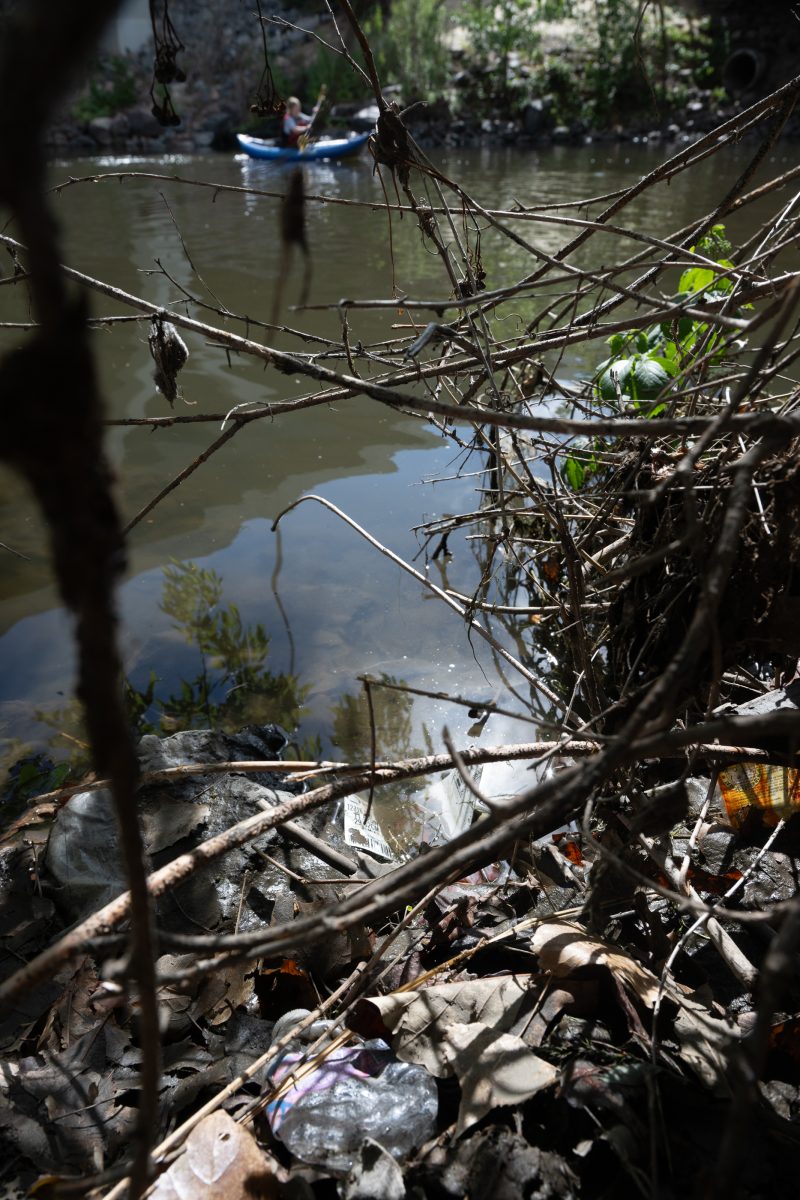
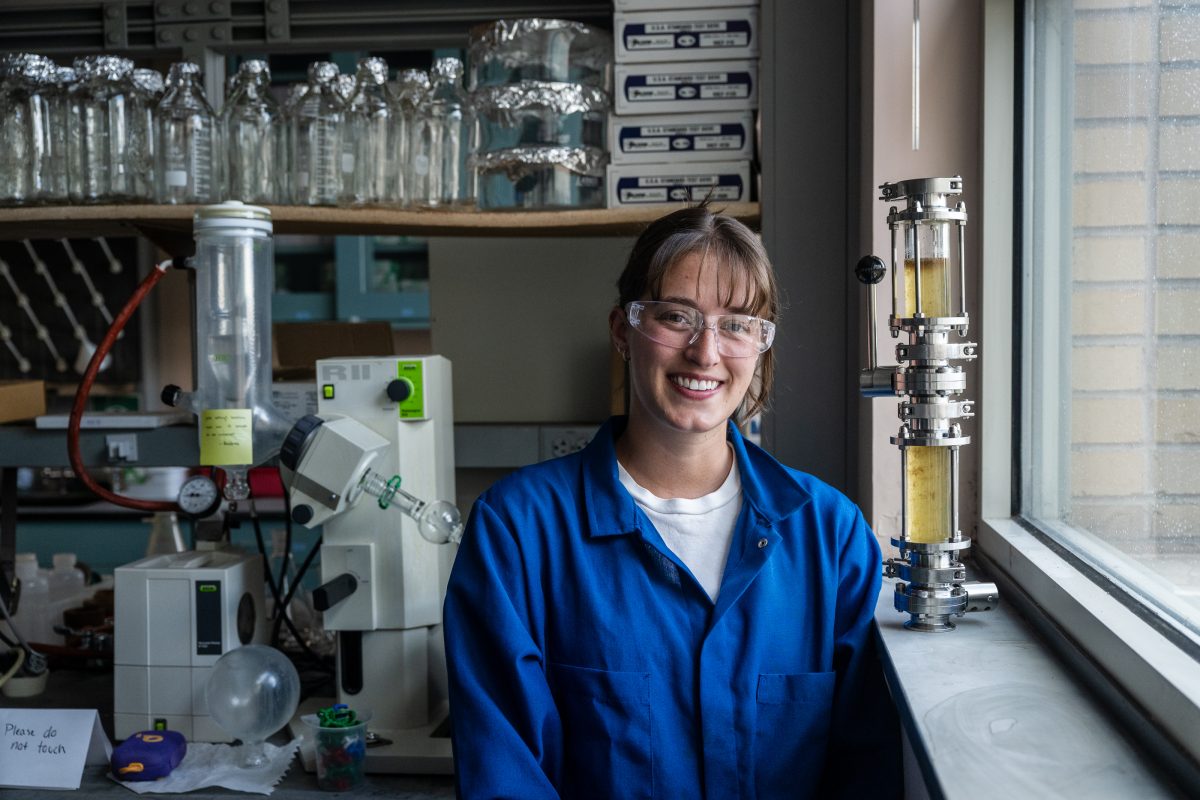
Mozrall, a 28-year-old doctoral candidate whose dissertation gave rise to this project, lays the groundwork for a solution to the infiltration of microplastics — defined as particles less than 5 mm long — into virtually every aspect of our lives, from fishing streams to bloodstreams. Working with both undergraduates and master’s students, she explores segments of the urban South Platte to determine the amount and types of microplastics that end up in the waterway.

Afterward, lab analysis of the day’s catch will yield further clues to the origin of the material. And overall, the students establish a workflow within the team for future research that extends beyond rivers to oceans and beaches, drinking water and even soil samples.
Although awareness of microplastics as a potential health concern has grown, Mozrall notes that there are still lots of gaps in understanding where they come from and the effects they have on the environment. Her research seeks to quantify some basic questions: How many microplastics end up in the river? What kinds? How big are they? And secondarily, where do they come from?
“There’s still a huge need for primary data, and we can’t model these plastics,” she says. “We can’t establish risk or impacts from microplastics without really understanding where they are, how they move and what’s going on with them. We’re also striving toward understanding them at large better and how they interact with our urban river systems.”
Through connections with Instituto Tecnológico de Santo Domingo, a private university in the Dominican Republic known as INTEC, Mozrall and her Mines colleagues forged a collaboration. Researchers at both schools have expanded their work to include the Ozama River — a somewhat larger (and more polluted) urban waterway in an area with a similar population density to Denver.
Mozrall pitched a study that would add a microplastics element to the research, she says, in order to figure out whether microplastics are appearing in similar concentrations and with similar polymer types to the macroplastics that have been observed — or whether they’re functioning in a totally different system.
“There is a very small number of studies that have been done in the Caribbean on microplastics, and nearly no microplastic research in the Dominican Republic,” she says. “And so our research there is really, really ground zero. I think the study we’re hoping to put out would probably be one of the first microplastic studies in the DR.”
Among other findings, the comparison of the two rivers could help determine whether the level of waste management — advanced in Denver compared to the Dominican Republic — could be a factor in the presence of microplastics.
As part of the exchange with Mines, Laura Aquino, a 23-year-old lab technician from INTEC, has joined students from the Golden school to gather data in Denver. Crouching by the bridge railing, she calibrates a flow meter that will measure the rate that the South Platte’s current passes through the net they will use to collect microplastic samples.
She has already seen characteristics that set the rivers in the two countries apart.
“The river water, the looks of it, the parameters that we’re measuring, they’re very different,” Aquino says. “The DR river is more polluted than the Denver rivers. The microplastic content, it’s actually very different between them. We’re still in the preliminary parts of the experiments, but there’s very much a difference.”
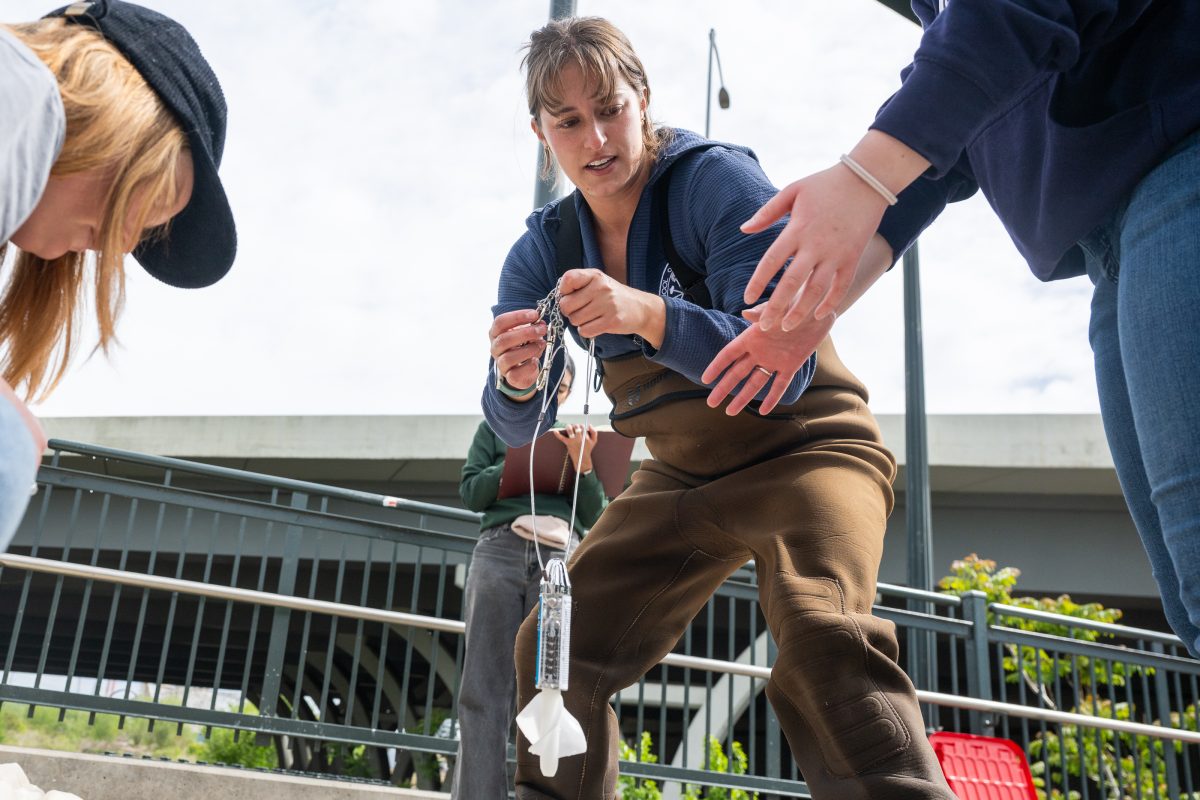
Sampling the South Platte
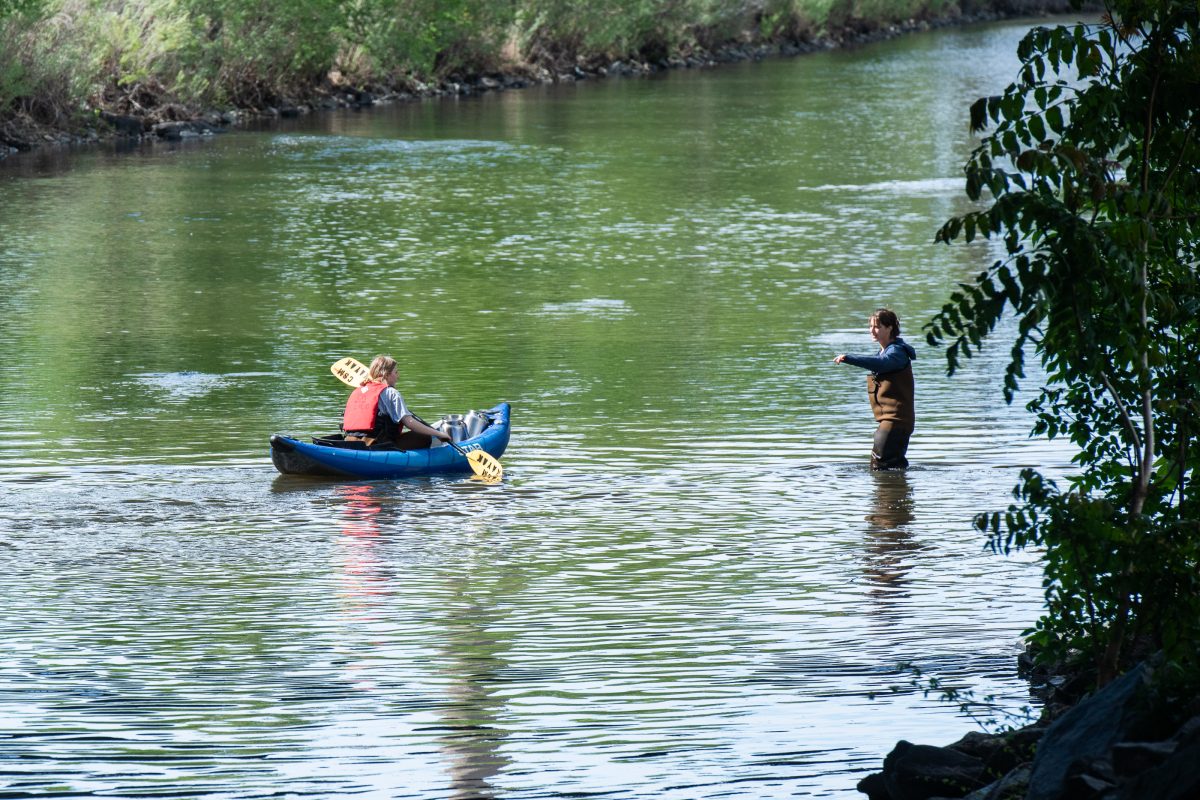
Before the researchers cast their net for samples, they carry the now fully formed kayak to the river’s edge and launch it into the middle of the lazy current. With a pipe-shaped pumping device, one of the students paddles to different locations and takes water samples from close to the surface and then the subsurface. Plastics have different densities — some float, some sink and some are suspended in between.
Finally, students lower the tubular net into the river by two ropes from atop the bridge. The calibrated flow meter sits centered at the mouth of the tube, spinning with the passage of water.
The net, whose mesh openings are a tiny 335 micrometers (barely more than 1/100th of an inch), remains submerged for five minutes before the researchers begin pulling it back up to the bridge. By changing out bags with even smaller mesh (between 125 and 250 micrometers) inside the net, the researchers can collect multiple samples without thoroughly cleaning the primary net in between.
Based on the amount of plastic collected, they’ll have usable data — basically, particles per unit of water — produced by an equation that takes into account the time, flow rate and diameter of the net.
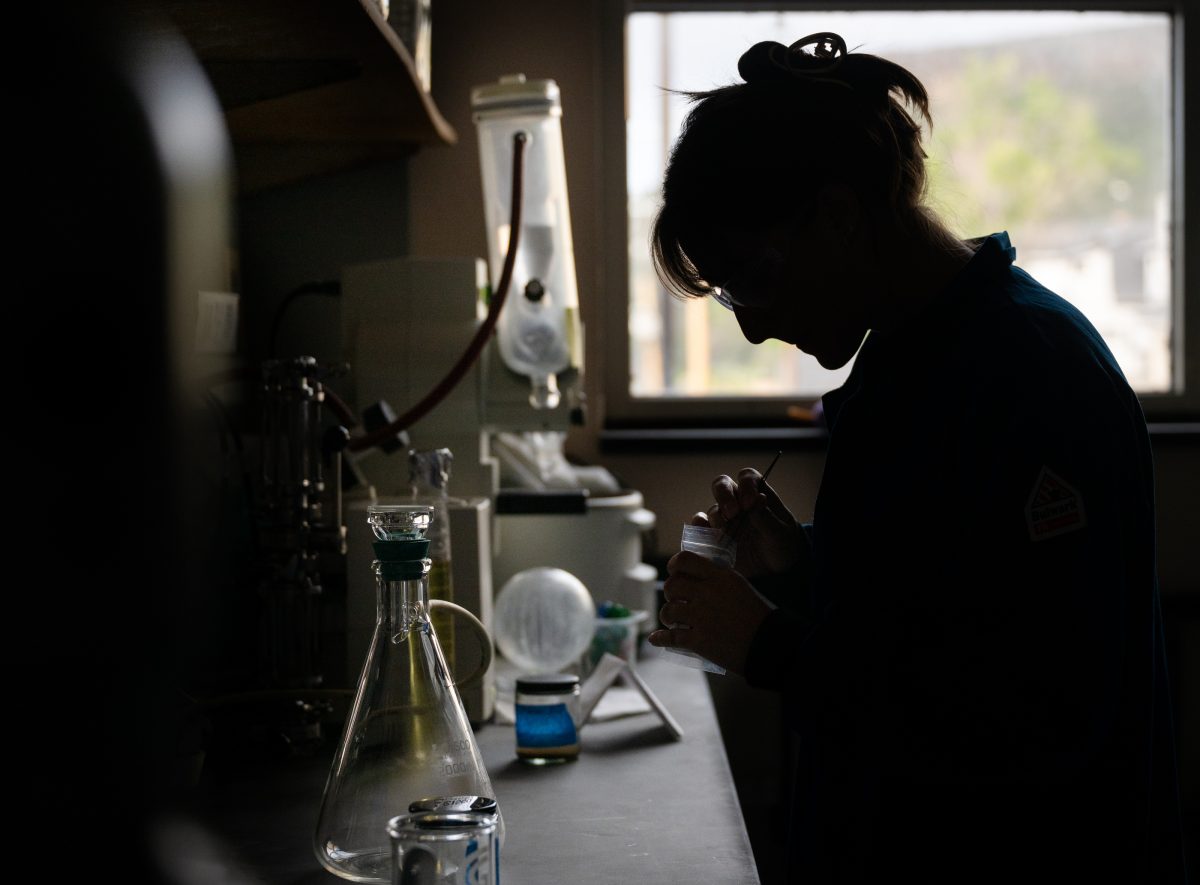
From there, Mozrall explains, the researchers can return to the lab and process the day’s samples to determine how much of which types of plastics fall in various ranges of size, shape and type.
“Just seeing the volume of plastic that we capture is really alarming sometimes,” she says. “And just shocking.”
Ginger Juzefyk, a 21-year-old senior at Mines who works on the microplastics research team, grew up on the water in New Jersey — Barnegat Bay, which has suffered over the years from pollution carried by rivers that feed it. So the presence of microplastics is, for her, kind of personal.
“Once we have those numbers, once we have those statistics,” she says, “I think it could be really eye opening for people. Just being able to look at a sample of river water and be like, ‘Wow, you can visibly see microplastics in that’ is just a good educational tool.”
Just three days earlier, the project team had done a similar sample collection a few miles upstream, near Chatfield Reservoir, and has plans to do others in the coming days at various locations within the city limits. But here, in the shadow of Empower Field at Mile High, the students work by a storm drain where water — likely the last of the runoff from a spring snowstorm — trickles across the concrete past an empty plastic milk jug and other containers. It’s yet another possible source for microplastics that end up in the river.
Elsa Scherzinger, a 22-year-old master’s student at Mines, met Mozrall in the research lab at the chemistry department when she was still an undergraduate. Although her master’s is focused on environmental modeling, her love of the “water space” made the river-centered microplastics project a natural fit.
“Microplastics are everywhere,” Scherzinger says. “We hear about it all the time, right? ‘Don’t eat on Teflon because microplastics are there.’ But I think protecting our waterways is really important. And I think studying microplastics and seeing where they are is the basis of what we can do. Because once you know where it is, then we can start to make strategies for how to deal with microplastics from there.”
In the lab, the process of analyzing the polymers can be time consuming, but Mozrall hopes to have usable data by some point this summer. The results will probably appear in the form of a peer reviewed publication for further input from the scientific community.
“I also would love to see how we can get the city involved with some of the data that we’re finding,” Mozrall says, “and see if there’s anything that we can do from more of a legislative standpoint to try to deter these plastics from entering the river in the first place.”
The early analysis of the Denver samples has revealed a lot of tire wear particles — bits of rubber from bike or car tires that eventually find their way into the river via storm drain runoff like the trickle that empties into the South Platte where the researchers sift through its flow.
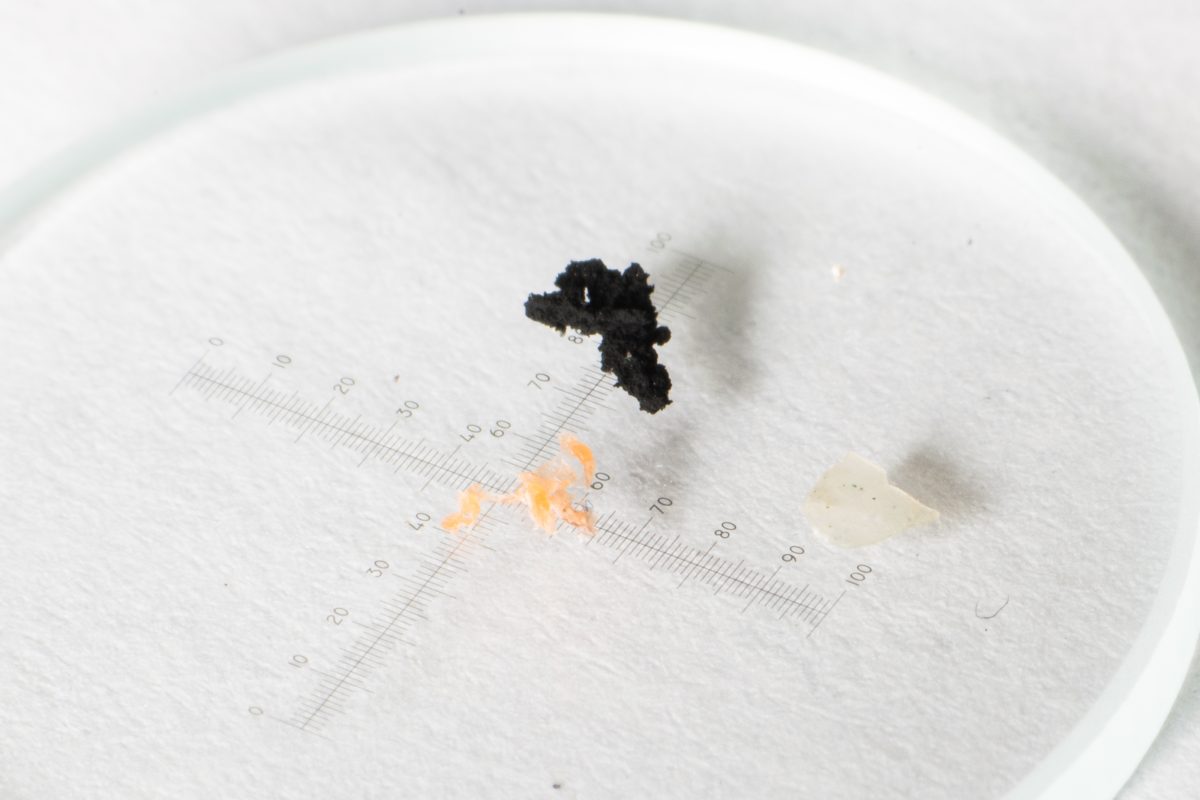
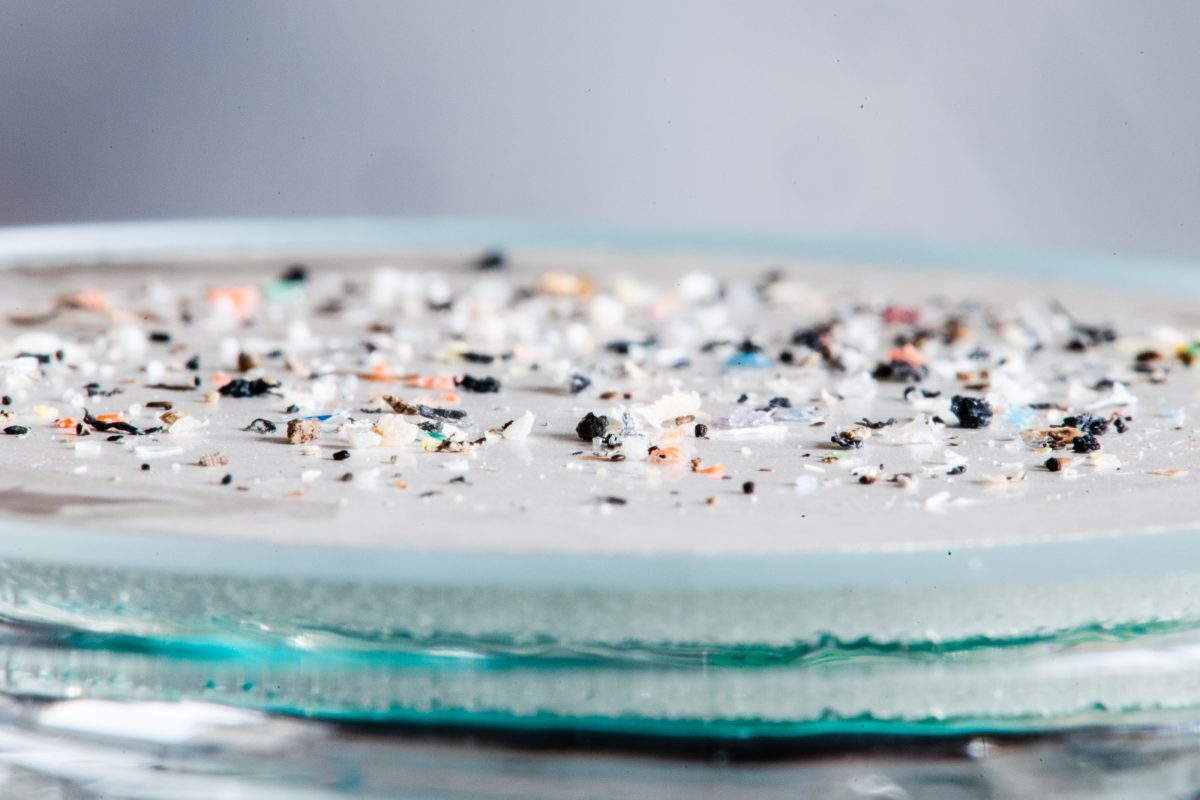
Mozrall also has noticed a lot of polyethylene, the ubiquitous polymer that’s part of … almost everything, from bags to consumer packaging and lots in between. Its overwhelming presence from such a variety of sources makes it inherently difficult to track. Plus, it’s difficult to determine at what phase it entered the river.
“There could be some pieces that sat in farm soil for 10 years and then a big rain came along and finally washed it into the river,” she says. “Or we could have a particle that just fell off someone’s bike tire five minutes ago — and that could all be in the same sample.”
By imaging and scanning the particles, the researchers can look for telltale signs like biofilm accumulation or weathering that might offer clues to their origin. But even those can be a mystery. Weathering, for instance, could point toward a particle being in the river for a decade, or just as easily becoming worn from a bumpy trip along river rocks on the journey to Denver from Chatfield Reservoir.
The research team eventually packs up and moves downstream a short distance to City of Cuernavaca Park to take additional samples — there’s a bigger haul here, possibly because the nearby confluence with Cherry Creek bolsters the South Platte’s flow — before the focus shifts back to the lab on Mines’ Golden campus.
The first step involves separating the water from the samples themselves, then adding a “digestion” solution that chemically eats away at the organic material, followed by a density separation that employs another type of solution in which sediments sink, but the plastics float.
Once separated, the plastics get a good rinse with purified, laboratory-grade water. Finally, they’re ready to be scanned, analyzed and become part of the record.
But beyond the data itself, Mozrall has a more general, overarching goal — to make the information available and understandable to people who may not have a science background.
“Microplastics are such a buzzword right now, and they’re really scary to a lot of people,” she says. “I think understanding more of the science helps to be able to digest it and know what is going on and what you can do to control your own exposure.”
 Print
Print