

A long-awaited measure that will help offset the cost of building the $1.69 billion Arkansas Valley Conduit in southeastern Colorado has been approved by the U.S. House and Senate and is headed to President Donald Trump’s desk for signature, according to a statement from Sen. Michael Bennet’s office.
The Southeastern Colorado Water Conservancy District, based in Pueblo, asked Colorado’s congressional delegation in 2024 to push for the act after new estimates showed the cost of the project had doubled since an early 2016 budget had been completed.
“We cannot thank Colorado’s Congressional delegation enough for the effort they put into making this bill a reality,” said Bill Long, president of the Southeastern District Board in a statement.

“The AVC has always enjoyed bipartisan support, but this effort was simply above and beyond in terms of importance to the people of southeastern Colorado,” Long said.
First envisioned as part of the U.S. Bureau of Reclamation’s Fryingpan-Arkansas Project in 1962, the pipeline languished on paper for decades because of high costs. The 130-mile pipeline starts just east of Pueblo and will extend out to Lamar, serving 39 communities.
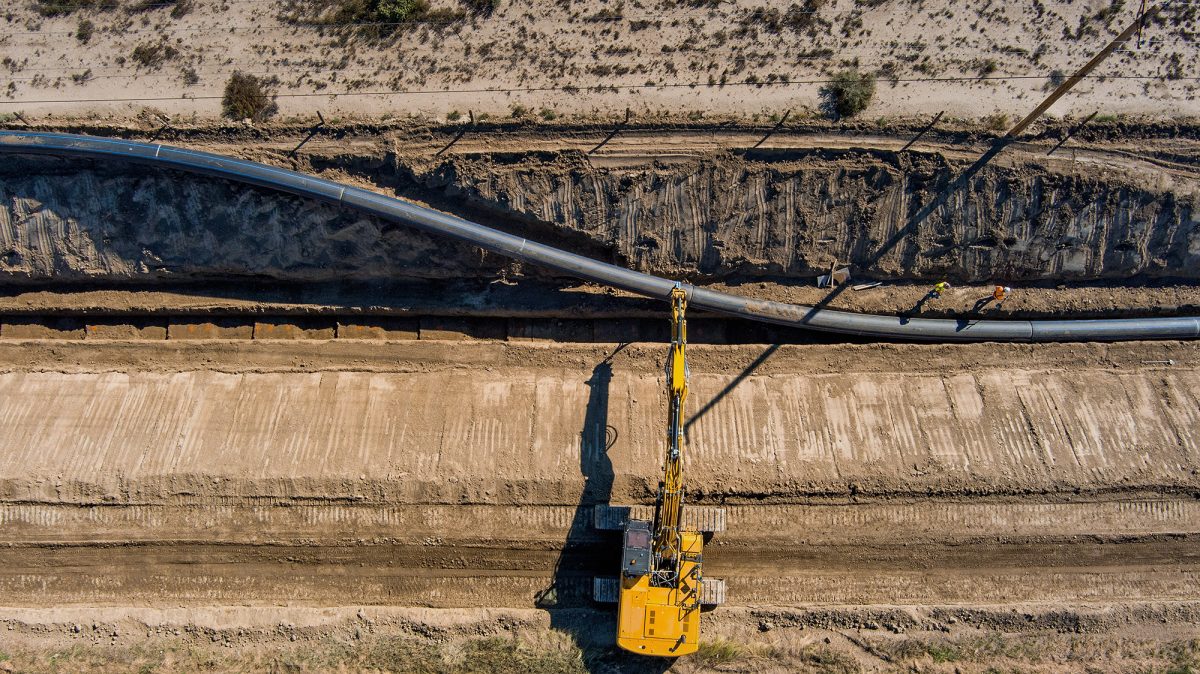
The need for clean water in the Lower Arkansas Valley became apparent in the 1950s and earlier, by some accounts, when wells drilled near the Arkansas River were showing a range of toxic elements, including naturally occurring radium and selenium. Both can cause severe health problems, including bone cancer and lung issues if high amounts are consumed.
Without safe drinking water, towns in the region have either had to haul water or install expensive reverse osmosis plants to purify their contaminated well water.
Things changed on the stalled project in 2023, when Congress directed some $500 million toward the pipeline.
This new law goes further, allowing the repayment terms on the loans from the federal government to be extended to 75 years, up from 50 years, and to cut interest rates in half, from 3.046% to 1.523%. The new law also will allow the project to be classified as one of hardship, a term that may allow the U.S. Bureau of Reclamation to forgive some loan payments if a case for economic hardship is made.
The bill passed the House, where it was sponsored earlier this year by Republican Reps. Lauren Boebert and Jeff Hurd, whose districts take in the pipeline’s route. It passed the Senate this week where it was sponsored by Bennet and Sen. John Hickenlooper, both Democrats.
Towns at the western end of the conduit, such as Avondale and Boone just outside Pueblo, could see water as soon as 2027, while others farther east will wait another 10 years or so as each segment of pipeline is laid and spurs to each community are built, according to the Southeastern Water Conservancy District.
 Print
Print